Rejoicing in the Dark
The Songs of Ascent aren't peppy, shallow songs disconnected from reality; they are often determined, realistic, and occasionally dark. Join Kami and her grandmother, Bobbie, as they discuss the realities of this journey up to the Mountain of the Lord, and the choices we can make to rejoice, even in the dark places.
Verses referenced in this week’s video: Psalm 130, Psalm 134
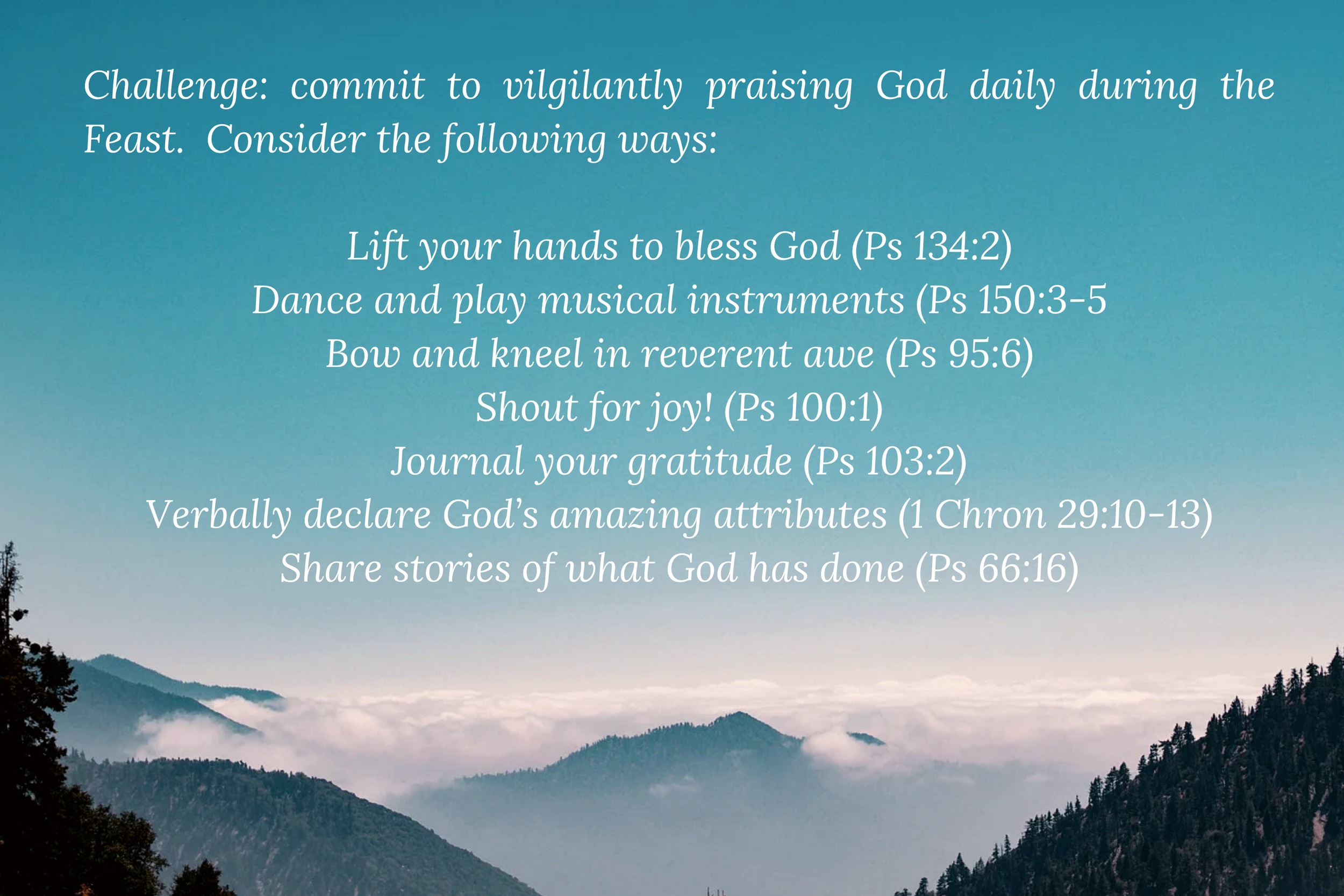
Verses referenced in this week’s challenge: Psalm 134:2, Psalm 150:3-5, Psalm 95:6, Psalm 100:1, Psalm 103:2, 1 Chronicles 29:10-13, Psalm 66:16
[Transcript]
Kami: Welcome back to Stir. I'm here with a very special guest today. This is my grandmother, Bobbie Hubbard, who has been celebrating the Feast of Tabernacles—
Bobbie: 60 Years.
Kami: 60 Years! That's hard to comprehend.
Bobbie: All my life, just about it.
Kami: I bet it feels like it!
Bobbie: It does.
Kami: That's wonderful. We're working our way through the Psalms of Ascent, and you know, it's so interesting because somebody said the Psalms of Ascent are very much like a road trip playlist—and I think to myself, when I put together a playlist, I’ve got pop, and I've got jazz, and exciting things, and ballads—and so I thought, Oh, they're going to be light hearted, like “Rah-rah! Go God!” These are not light hearted, Grandma! This is some raw stuff!
Bobbie: Life
Kami: Life! Right! So the hardship of the road is something that we've all dealt with one way or another. I really wanted to talk today specifically about Psalm 130, and then I think it's kind of a counterpart—Psalm 134—which we'll be reading on the first day of the Feast. Now, Psalm 130 is kind of dark; it starts off with a cry for help. I'll just read the beginning: “Out of the depths I have cried to you, O Lord. Lord, hear my voice. Let your ears be attentive to the voice of my supplications.” And then the psalmist goes on to talk about waiting on God. You know, as I was working on the content for this week—months ago—we had a family situation where a loved one was suffering through some really intense health problems, and this psalm and my reflections on it gave me so much strength and hope for that circumstance. When it talks about, “I wait for the Lord, my soul waits, and in His Word I do hope. My soul waits for the Lord more than those who watch for the morning; yes, more than those who watch for the morning.” And I just imagined my whole family in these night watches, in this dark time where we were waiting on God. There was nothing we could do to change the circumstances; there was nothing the family member could do. It was in God's hands, and it was a release for me. It was a release.
Bobbie: You're relieved from the obligation to do something.
Kami: Yeah.
Bobbie: Well, the thing is, we pray and we put it in God's hands and that's where we need to leave it. If there isn't really anything that we can do about it, then God can do something about it—and he will in his time, in his way. And it may not be what we want, but that's his will.
Kami: Yeah, that's certainly true. One of the things that I wrote about this passage was that it was so interesting to me that the psalmist, by the end of the psalm, uses the pain of that dark season. Whatever this psalmist was going through, he used it to point the nation to worship. The psalm ends with “O Israel, hope in the Lord. For with the Lord there is mercy and abundant redemption, and he shall redeem Israel from all his iniquities.”
Bobbie: Yes, that's true for each individual also.
Kami: Yeah, and that’s so interesting. It was both the individual moment—you know, what I was going through, what my family was going through—but then the psalmist took it almost corporately. And as the Israelites would have traveled up—this is just this beautiful acknowledgement of the darkness of the road, the hardness of this life.
Bobbie: Yeah, that wasn't easy for them to walk all that way, and most of them did walk. And that’s—I can’t imagine it. I’m gonna get in a car and drive.
Kami: Make it easy, make it quick.
Bobbie: Right.
Kami: But it was a process, and I love how it's a process for us—at the very least—getting into the spiritual state of going up to worship God and preparing. But also it's a process for us, this entire journey of our lives, making our hearts right with God; being molded into his image…which really kind of brings us to the second Psalm that I felt was kind of a bookend to Psalm 130, because it's Psalm 134, which they would have sung on the first day of the Feast. It talks about the servants of the Lord who by night stand in the house of the Lord. And I really thought about the priesthood and those specifically called to serve in the temple. But I love that this is a vision of all of God's people serving in the night watches, despite the darkness of this world, and choosing because we're called to worship God in that darkness.
Bobbie: The darkness and the light.
Kami: Yeah. Grandma, one of the reasons I wanted to talk with you today is because this will be the first year that you're staying home from the Feast of Tabernacles because of your health. Tell me a little bit about your mental process in what is kind of a dark moment for you, and what you're doing.
Bobbie: It's not a dark moment for me because most people, throughout their years of keeping the Feast, there have been times when for various reasons, they've had to stay at home, and I never have had to; I've been able to go to the Feast for 60 years, and thoroughly enjoyed it every time. But I always knew that someday I wouldn't be able to go because I would get too old to go. So I was sort of mentally prepared for it. And then I started thinking about how I'm supposed to rejoice in the Feast, so what am I going to do to make this happen? Because you can just be sad all the time because you're not there anymore; you're not visiting with the people that you know and want to see, and meeting new people…but you can do other things. There are things that you can do, and I have made a list of things I want to do with the other people who are staying behind, because I'm not the only one here, and they're all over. I want to share the Feast with others, and we can do that even though we're at home. We can send cards, we can make phone calls, maybe we can have lunch together. There are lots of different things that we can do if we make the effort to do them. Some will and some won't, and that's up to them. The last couple of years have been really hard for me to keep the Feast, and finally I was thinking about not going, but I kept going…and then last year I said, “This is it; I can't do this anymore.” And it was not something that I wanted to do; I did not want to stay home from the Feast. That's not my choice. But that's the way it is…So, I'm not sad about it; I'm looking forward to it, really. And I've always felt like the Feast is where the sermons are and the people are; doesn't matter your location, really. I can still—because of modern technology—I can go to church. I can be there with you guys, which is awesome. That's wonderful, because that wasn't always so, but it is now. So I can watch the services and be a part of them. And then my sharing with the brethren will be mostly local, and that's okay too, because like I say, I'm not the only one…and they get lonely too, and they're sad or frustrated that they can't be at the Feast, so I want to help them to rejoice as much as I can.
Kami: I love that you're taking an outward focus in this moment, and it's a reminder that the Feast should have an outward focus. And I love that you're not being limited by your circumstances.
Bobbie: Well, I am somewhat limited, but I'm going beyond; I'm not letting it limit me, let’s put it that way. I can't go—that's just a fact of life—but I can still rejoice and have the Feast and share the Feast with others, and that's what I want to do.
Kami: You were talking earlier about being called to share, regardless of your circumstances, throughout all the years of your life. Tell me a little bit about how you shared at the Feast, even in times of poverty.
Bobbie: Yeah, well, there have been a few years like that. Well, one year—or two years, actually—we had the Feast in the town that we lived in. And it turned out to be a blessing because we lived in the country and we could invite people out to our house. My husband brought in some bales of hay, and he built a bonfire outside, and we had hot dogs, and we had a great time! There were people there I didn't even know.
Kami: Well, I bet Grandpa invited the whole world.
Bobbie: Yeah, well, your mother did, too, you know. Those were the days when we were putting Plain Truth [magazines] in newsstands all over town, and we had a big table set up in the arena, and all of our booklets and magazines were on it. Well, that hadn't been done before, so we did that. And I can remember your older brother, Tim, was a baby—he was about 1, and my little boy was three years older, and they manned the table.
Kami: That's funny. I'm going to be in charge of the info desk where I'm at, so it's a full circle. Right back to it.
Bobbie: Little ones can help, too.
Kami: That's right.
Bobbie: They can. And it makes them a part of it, too, because you can't just set them aside and say, “Okay, here's your toys. Take care. Be quiet. Don't talk.” You have to involve them in some way or other.
Kami: Well, like back to the Psalm—we're all called to worship.
Bobbie: Our children, too; they have to learn.
Kami: Giving them that opportunity to worship and to praise God and to participate. And I think also it's you choosing to rejoice in your circumstances—
Bobbie: Yes.
Kami: —which is always a struggle. It's not human nature to rejoice in our circumstances.
Bobbie: Oh, no; I would much rather go to the Feast. So you do what you can, and sometimes you have to make choices that you would rather not make, and that's the thing about our whole life: We pray about it, and we give it to God, and then we do what we can and wait for Him to do His part.
Kami: Yeah. Thank you so much for joining me today, Grandma.
Bobbie: Thank you.
Kami: I appreciate it.